Workplace robots are becoming increasingly common across manufacturing, warehousing, logistics, automotive, and other industries as businesses adopt automation to improve productivity and efficiency. In 2024, there were reported to be4 million operational robots
in worksites across the world.
While robots can perform repetitive, heavy, and precise tasks, they can also pose hazards, including unexpected movement, collisions, crushing, and electrical risks when they are not properly designed, installed, operated, or maintained.
Employers should assess robot-related hazards before installation and continue evaluating them throughout the robot’s operating life, particularly when equipment, software, processes, or work environments change. This guide explains key workplace robot safety requirements, including robotic safety standards, risk assessments, safeguarding, safe operating procedures, worker training, maintenance, and emergency procedures.
Understand the Safety Risks of Workplace Robots
Before introducing a robot into the workplace, employers should identify the hazards associated with the robot itself, its tools and materials, and the surrounding work area. Understanding these risks helps employers determine appropriate safeguards and procedures to protect workers who operate, maintain, program, or work near robotic systems.
- Unexpected robot movement
- Crushing and pinch-point hazards
- Impact and collision hazards
- Entrapment between robots and fixed objects
- Electrical and mechanical hazards
- Hazards from end-effectors, tools, and materials being handled
- Risks created by programming, maintenance, or human error
Conduct a Robot Safety Risk Assessment
A robot safety risk assessment helps employers identify potential hazards before they result in injuries or equipment damage. The assessment should consider the complete robotic system, including the robot, tools, materials, surrounding environment, and people who may interact with it. It should also be reviewed regularly as the system or workplace changes.
- Identify hazards associated with the robot, equipment, materials, and work environment
- Consider normal operation as well as foreseeable misuse and abnormal conditions
- Evaluate who may be exposed, including operators, maintenance workers, contractors, and visitors
- Determine appropriate safeguards based on the identified risks
- Reassess risks whenever the robot, process, software, tooling, or work environment changes
Follow Applicable Robotic Safety Standards
Employers should identify the safety standards and regulatory requirements that apply to the specific robot, application, and workplace rather than relying on a single general requirement. Following recognized standards can help organizations identify hazards, establish appropriate safeguards, and reduce risks associated with robot operation, integration, maintenance, and human interaction.
ANSI/RIA Robot Safety Standards
The ANSI/RIA R15.06 standard provides guidance for the safety of industrial robots and robotic systems in the United States. It addresses areas such as robot system design, integration, safeguarding, and risk reduction. Employers and system integrators should use the current applicable edition and consider the specific requirements of the robot and application.
ISO Robot Safety Standards
The ISO 10218 series addresses safety requirements for industrial robots and robot systems, including requirements relevant to manufacturers and system integrators. ISO/TS 15066 provides additional guidance for collaborative robot applications where humans and robots may work in close proximity. These standards can support structured risk assessments and the selection of appropriate protective measures.
OSHA Requirements
OSHA addresses workplace hazards associated with machinery through requirements such as machine guarding and the control of hazardous energy. Employers should establish appropriate safeguards to prevent workers from coming into contact with dangerous moving parts and use lockout/tagout procedures when servicing or maintaining equipment where applicable. OSHA requirements should be evaluated alongside relevant ANSI/RIA and ISO standards to develop a comprehensive robot safety program.
Install Proper Robot Safeguards
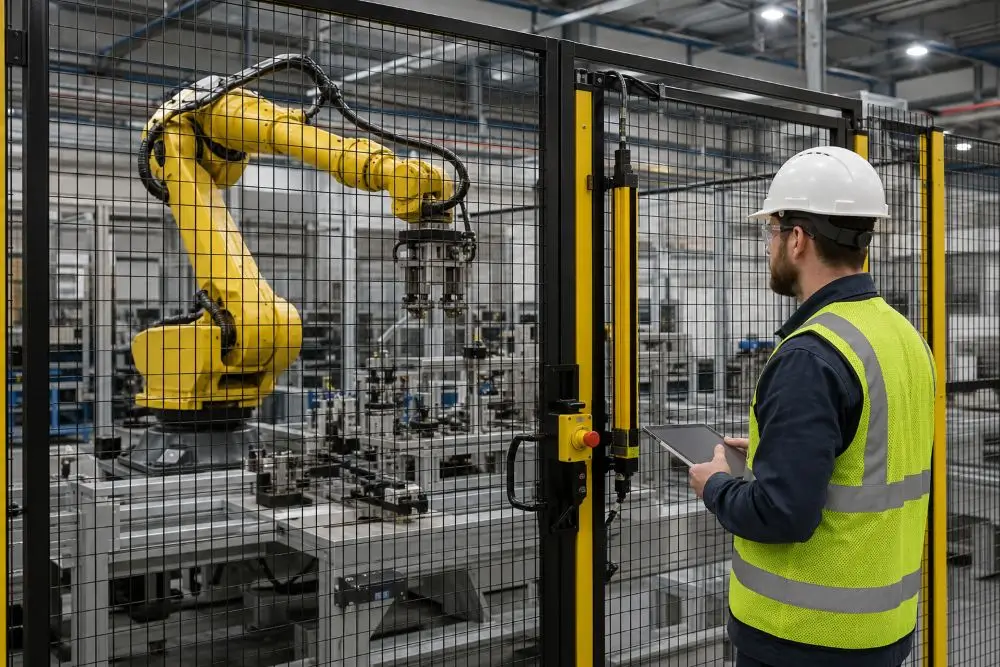
Robotic systems should be equipped with safeguards that prevent workers from entering hazardous areas or coming into contact with moving equipment. Depending on the risk assessment, employers may use physical barriers, safety fences, interlocked gates, light curtains, safety scanners, emergency-stop systems, and safety-rated controls. Safeguards should be designed around the robot's movement, tools, materials, and the level of human interaction with the system.
Prevent Unauthorized Access
Access to robot operating zones should be limited to trained and authorized personnel. Employers should clearly mark hazardous areas and use appropriate access controls for operators, maintenance workers, contractors, and visitors. Safety devices should never be bypassed or disabled simply to make work faster or more convenient, as doing so can expose workers to serious injury hazards.
Provide Appropriate Worker Training
Workers should receive training specific to the robots, equipment, and hazards they may encounter on the job. Training should cover safe operation, emergency-stop procedures, hazard recognition, and the proper use of safeguards. Operators, programmers, maintenance workers, and supervisors should receive training appropriate to their responsibilities, with additional instruction provided whenever equipment, software, processes, or hazards change.
General workplace safety training does not replace task- or machine-specific instruction. Robotics safety training should be tailored to the robot system, its hazards and safeguards, and the responsibilities of the workers who operate, program, maintain, or work around it.
Establish Emergency Procedures
Employers should establish clear emergency procedures for situations such as unexpected robot movement, system faults, power failures, or worker injuries. Employees should know how and when to use emergency-stop systems, how to report incidents, and how to safely respond if someone becomes trapped or injured. Procedures should also explain who is responsible for assessing the situation and how the robot can be safely inspected and restarted after an emergency.
Inspect and Maintain Robot Safety Systems
Regular inspection and maintenance are essential for keeping robotic safeguards effective. Employers should routinely check guards, interlocks, sensors, emergency stops, and other protective devices according to manufacturer recommendations, while promptly repairing damaged or malfunctioning components. Inspections and repairs should be documented, and robots should never be operated when critical safety systems are defective, bypassed, or otherwise unable to provide the intended protection.
Conclusion
Workplace robots can improve productivity, efficiency, and consistency, but they must be introduced and operated with appropriate safety measures. Employers should conduct regular risk assessments, follow applicable robotic safety standards, install effective safeguards, establish emergency procedures, and provide workers with training specific to the equipment and hazards they may encounter.
Robot safety is an ongoing responsibility rather than a one-time process. Regular inspections, maintenance, updated procedures, and continued worker training can help keep robotic systems safe as equipment and workplace conditions change. Sign Up today to access OSHA training and help build a safer, better-prepared workforce.