Respiratory protection is an important part of workplace safety for employees exposed to airborne hazards such as dust, fumes, gases, and other harmful substances. OSHA’s Respiratory Protection Standard, 29 CFR 1910.134, establishes requirements to help employers select appropriate respirators and ensure workers can use them safely. These requirements include medical evaluations, respirator fit testing where applicable, training, and written respiratory protection programs.
OSHA has proposed changes that could reduce some of these requirements by removing mandatory medical evaluations for employees who use filtering facepiece respirators, including N95 respirators, and loose-fitting powered air-purifying respirators (PAPRs). If finalized, the proposal could change how affected employers manage their respiratory protection programs and reduce certain administrative responsibilities. However, it also raises questions about worker health and how employers can maintain effective respiratory protection while complying with the revised requirements.
Understanding OSHA’s Current Respiratory Protection Requirements
OSHA’s Respiratory Protection Standard, 29 CFR 1910.134, establishes requirements to protect employees from workplace exposure to harmful airborne substances, including dust, fumes, gases, vapors, and other contaminants. When respirators are necessary or required, employers must maintain a written respiratory protection program that addresses respirator selection, medical evaluations, fit testing where applicable, employee training, and proper equipment maintenance. The standard also emphasizes controlling airborne hazards through feasible engineering measures, such as ventilation, before relying on respiratory protection.
Under the current standard, employers must provide a medical evaluation before an employee is fit tested or required to use a respirator at work. A physician or other licensed healthcare professional conducts the evaluation using a medical questionnaire or an appropriate medical examination to determine whether the employee can safely use the respirator. This is important because respirator use can place additional physical demands on workers, depending on the equipment, job duties, environmental conditions, and individual health. Follow-up evaluations may also be necessary if symptoms, medical advice, or changes in working conditions indicate a potential concern.
What Is OSHA Proposing to Change?
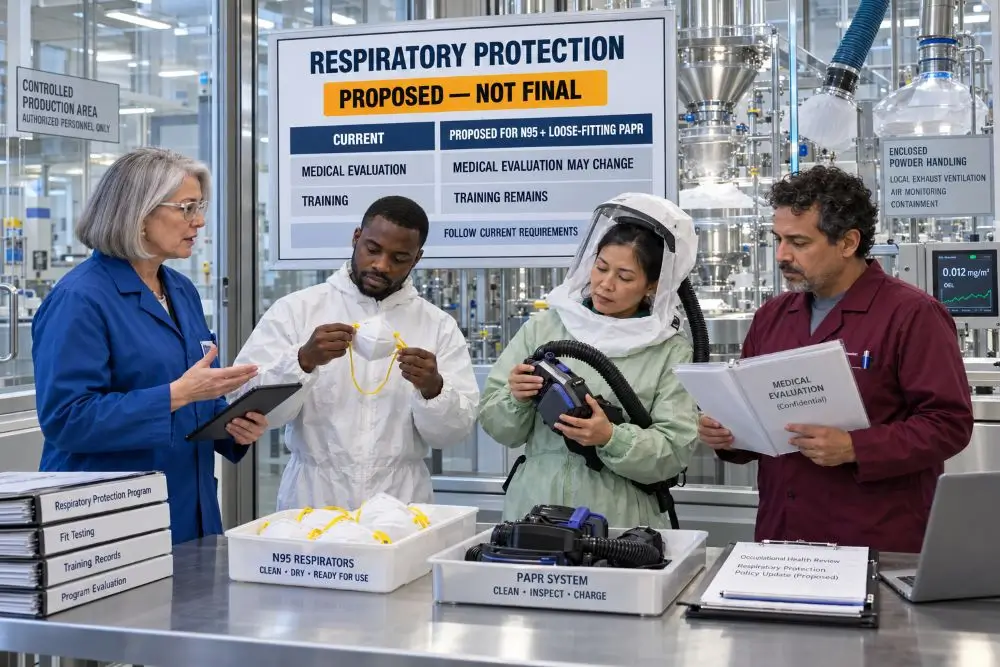
OSHA has proposed amending its Respiratory Protection Standard to remove mandatory medical evaluations for employees required to use filtering facepiece respirators (FFRs), including N95 respirators, and loose-fitting powered air-purifying respirators (PAPRs). The proposed change aims to reduce certain compliance requirements for employers whose workers use these respirator types.
The proposal would not eliminate medical evaluations for all respirator users. Employees who use other types of respirators, including tight-fitting respirators, would remain subject to applicable medical evaluation requirements. Until OSHA finalizes any changes and they become effective, employers should continue following the existing standard.
Why Is OSHA Proposing These Changes?
OSHA says the proposed amendment is intended to reduce regulatory and administrative burdens for employers whose workers use filtering facepiece respirators and loose-fitting PAPRs. The agency argues that available evidence does not establish the need for mandatory medical evaluations for these respirator types in workplaces that are not immediately dangerous to life or health. The proposal could simplify compliance and reduce the time and costs associated with medical evaluations.
However, the change is still part of OSHA’s rulemaking process, not a finalized requirement. OSHA reopened the public comment period in June 2026 and held virtual hearings in August to gather further input. Employers should continue following the existing Respiratory Protection Standard until any final rule is published and takes effect.
Potential Benefits for Employers and Workers
If finalized, OSHA’s proposed changes could simplify some aspects of respiratory protection program management for employers whose workers use filtering facepiece respirators or loose-fitting PAPRs. The potential benefits mainly involve reducing administrative requirements and making certain workplace processes easier to manage.
Reduced Administrative Workload
Employers may spend less time coordinating medical evaluations for workers using the affected respirator types. This could allow safety teams to focus more on other responsibilities, such as hazard assessments, employee training, and monitoring workplace conditions.
Potential Time and Cost Savings
Removing mandatory medical evaluations for eligible respirator users could reduce the time spent arranging appointments and managing related documentation. Employers may also save on evaluation costs, although actual savings would depend on workforce size and existing procedures.
Simpler Employee Onboarding
For affected workers, the proposed change could make the process of beginning certain jobs less complicated by removing one step from respirator-related onboarding. Employers would still need to communicate respiratory hazards, provide appropriate training, and ensure workers understand safe respirator use.
Greater Flexibility in Program Management
Employers could have more flexibility when organizing respiratory protection programs for workers who use filtering facepiece respirators or loose-fitting PAPRs. However, respirator selection, hazard assessment, training, and other applicable requirements would remain important parts of maintaining effective workplace protection.
Potential Risks and Concerns
Removing mandatory medical evaluations for certain respirator users could raise concerns about identifying individual health issues that may affect their ability to work safely. Even when using filtering facepiece respirators or loose-fitting PAPRs, employees may face physically demanding tasks, high temperatures, or challenging working conditions that can affect their comfort and ability to perform their jobs.
Without a required evaluation, some health concerns may go unrecognized unless workers report symptoms or employers identify other warning signs. However, the proposal would not eliminate employers’ broader respiratory protection responsibilities. Employers would still need to assess workplace hazards, select suitable respirators, provide required training, and maintain effective protection practices under applicable OSHA requirements.
Conclusion
OSHA’s proposed changes to its Respiratory Protection Standard could reduce administrative work and costs for employers whose workers use filtering facepiece respirators or loose-fitting PAPRs. However, the potential removal of mandatory medical evaluations also raises important questions about individual health considerations and maintaining effective respiratory protection in the workplace.
Since the proposal is not yet a finalized rule, employers should continue following current OSHA requirements and monitor official updates. Reviewing respiratory protection programs, assessing workplace hazards, and providing appropriate training remain essential steps toward protecting workers and maintaining compliance.