
24 Hour Hazardous Materials Technician Level III Responder ‑ 16 Hours Online (With Verifiable Part 1 (FRO) Prerequisite)
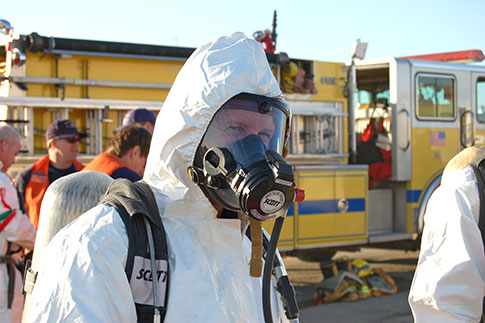
The 24 Hour Hazardous Materials Technician Level III Responder - 16 Hours Online course is tailored for emergency responders, hazardous materials technicians, and safety professionals who need to enhance their knowledge of hazardous material handling and response. This HMT Training online course covers essential hazmat technician skills, including identification, containment, and mitigation of hazardous materials incidents.
In the Hazmat technician class participants gain practical understanding through interactive online lessons, preparing them to respond safely and effectively in real-world scenarios. Upon completion, students receive Continuing Education Units (CEUs), a Certificate of Completion, and a PVC wallet ID to validate their training. The Hazmat technician online course ensures requirements with DOT and OSHA standards and provides foundational skills to support career advancement in hazardous materials response.
 Self-Paced Training
Completion Certificate
No Hidden Fees
Job Aid
Self-Paced Training
Completion Certificate
No Hidden Fees
Job Aid
Why Workers Choose Us
| features |  |
other providers |
|---|---|---|
| Instant Downloadable Certificate |  |
|
Free Study Guide

|
|
|
| Discounts For Businesses
|
|
 |
| No Hidden Cost | |
|
| Mobile Compatibility
|
|
|
| Flexible Learning
|
|
|
Satisfied Customers
Learning Objectives
- Understand the roles and responsibilities of a Level III Hazmat Technician in emergency response scenarios.
- Identify hazardous materials using proper recognition and classification methods.
- Apply safety procedures to protect oneself, team members, and the public during hazmat incidents.
- Develop effective containment and mitigation strategies for hazardous materials releases.
Course Outline
-
1. Course Introduction
- The 24 Hour Hazardous Materials Technician
-
2. Part 1 - First Responder Operations
-
3. Part 2 - The Hazardous Materials Technician
-
4. Module 1 - Introduction to the Hazmat Technician
- Introduction to Part 2 - The Hazardous Materials Technician
- Regulatory Requirements for the Hazmat Technician
- Medical Surveillance and the Hazmat Technician
- Emergency Response Planning
- Part 2 - Module 1 Exam
-
5. Module 2 - Hazmat Incident Command
- Hazmat Incident Command and the Public Sector Response
- Hazmat Group Functional Leaders
- Additional ICS Hazmat Group Positions
- Hazmat Incident Command and the Private Facility Response
- Part 2 - Module 2 Exam
-
6. Module 3 - Toxicology and Chemical Hazards
- Hazardous Materials Referencing
- Introduction to Toxicology
- The Importance of Dosage
- Types of Toxic Substances
- Toxicological Effects
- Factors that Influence Toxicity
- Physical and Chemical Properties
- Part 2 - Module 3 Exam
-
7. Module 4 - Hazmat Incident Operations
- Site Control Tactics and Strategy
- Incident Safety
- Hazard and Risk Assessment
- Advanced Hazmat Mitigation Techniques
- Hazmat Incident Decontamination
- Special Considerations for the Hazmat Technician
- Part 2 - Module 4 Exam
-
8. Module 5 - Animated Video Series Example
- Hazmat Incident from Notification to Termination Part 1
- Hazmat Incident from Notification to Termination Part 2
- Summary and Conclusion for Part 2
-
9. Part 3 - Hazmat Tech Equipment and Scenario
-
10. Module 1 - Introduction to the Hazmat Technician Equipment and Scenario
- Introduction to Part 3 - The Hazmat Technician
-
11. Module 2 - Respiratory Protection
- Introduction to Respiratory Protection
- Using Respiratory Protection
- Part 3 - Module 2 Exam
-
12. Module 3 - Using Chemical Protective Clothing
- Medical Considerations for Wearing CPC
- Using Chemical Protective Clothing
- Chemical Protective Clothing Selection
- Chemical Protective Clothing Classifications
- Donning and Doffing CPC
- Inspection Storage and Maintenance of Protective Clothing
- Decontaminating Chemical Protective Clothing
- Part 3 - Module 3 Exam
-
13. Module 4 - Using Monitoring and Detection Devices
- Preventing Sparks During Gas Detection
- Sensor Technology
- Types of Gas Detection Systems
- Colorimetric Tubes and Diffusion Tubes
- Flammability and CGIs Combustible Gas Indicators
- PIDs and FIDs
- Other Detection Devices
- Part 3 - Module 4 Exam
-
14. Module 5 - Video Equipment Familiarization
- Video - Respirators
- Video - Level A
- Video - Level B
- Video - CPC Components and Accessories
- Video - Monitoring and Detection
- Video - Miscellaneous Tools and Equipment
- Video - Decontamination
Training Process
A comprehensive Level III Hazardous Materials Technician training program must cover general awareness, function-specific tasks, safety procedures, and security awareness. In-depth security training is required if a security plan applies, and driver training is necessary for any employee operating a motor vehicle as part of hazmat operations. Employers must ensure that each Hazmat Employee is trained, tested, and certified within 90 days of starting their role or assuming new responsibilities. Employees who have not completed initial training may perform hazardous materials duties only under direct supervision. Recurrent training is required at least once every three years, though air carrier employees must follow FAA rules, which mandate retraining every two years. This online course provides instruction for personnel involved in the response, containment, and mitigation of hazardous material incidents. Additional training may be necessary depending on the employee’s responsibilities, including emergency response, advanced DOT hazmat protocols, or proper use of personal protective equipment (PPE). Site-specific training should also be provided by the employer, focusing on company procedures, equipment, and emergency protocols. All training should be documented and maintained according to Federal, State, or local requirements.
VIDEO TESTIMONIAL
FAQ
Who should take this course?
Is this course fully online?
Do I receive a certificate upon completion?
How soon must new employees complete the training?
Is recurrent training required?
Join our mailing list
Get announcements, industry updates and promotional offers.
17350 TX-249 Ste 220 19204, Houston, TX 77064, United States
