Workplace safety is not just about policies and protective equipment; it also depends heavily on visual communication. Floor markings play a crucial role in guiding movement, identifying hazards, and maintaining organization within industrial and commercial environments. Understanding OSHA floor marking standards helps businesses create safer, more efficient workplaces while staying safe with regulatory expectations.
In fast-paced environments such as warehouses and production facilities, employees often rely on quick visual cues rather than written instructions. Floor markings act as an immediate reference point, helping workers navigate spaces safely without interrupting workflow. They also support better coordination between teams, especially in areas where forklifts, machinery, and pedestrian traffic intersect. By implementing clear and consistent markings, organizations can minimize confusion, improve response times in critical situations, and reinforce a culture of safety across all operational levels.
Why Floor Markings Are Important
Floor markings are more than just colored lines on the ground. They serve as a visual language that communicates essential safety information quickly and effectively. Properly implemented markings can:
- Reduce accidents by separating pedestrian and vehicle traffic
- Highlight hazardous areas and restricted zones
- Improve workflow efficiency by defining storage and movement areas
- Support emergency preparedness by marking exits and safety equipment locations
Without clear floor markings, workplaces become prone to confusion, increasing the risk of injuries and operational disruptions.
Important OSHA Requirements for Floor Markings
While OSHA does not specify exact colors for every situation, it does require that hazards be clearly marked and that safety information be easily understandable. Employers must ensure that markings are:
- Visible and durable
- Consistently applied throughout the facility
- Maintained regularly to prevent fading or damage
- Clearly understood by all employees
OSHA also emphasizes the importance of training workers to recognize and respond to these markings. Simply applying paint or tape is not enough; employees must understand what each marking represents.
OSHA Standards of Floor Marking Color Code Guide
Although OSHA itself does not enforce a strict color coding system, it recognizes ANSI color standards as best practice. Following these guidelines ensures consistency and improves workplace safety.
Here is a commonly accepted OSHA standards of floor marking color code guide
Yellow: Used for caution areas, including walkways, aisles, and traffic lanes. It is the most commonly used color for general safety markings.
Red: Indicates danger or emergency-related items such as fire equipment, fire extinguishers, and emergency stop buttons.
Orange: Highlights hazardous machinery or parts that may pose a risk.
Green: Marks safety equipment locations such as first aid stations, eyewash stations, and emergency exits.
Blue: Typically used for informational purposes or to mark areas under maintenance or inspection.
Black and White: Often used for housekeeping purposes, such as marking storage areas or boundaries.
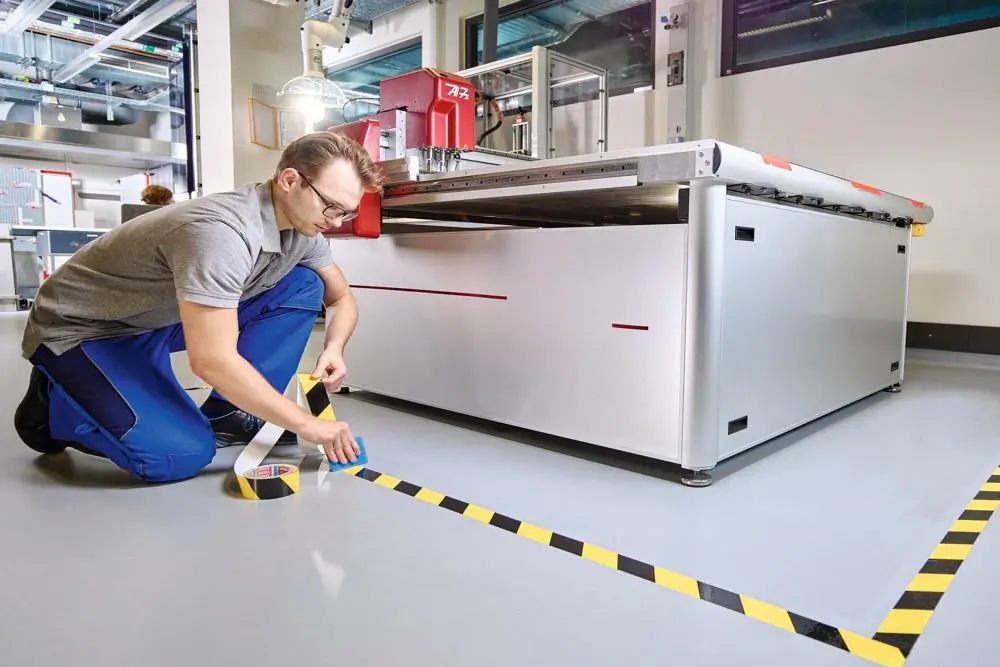
Black and Yellow Stripes: Indicate physical hazards, such as areas with potential for tripping or falling.
Some of The Best Practices for Compliance
Complying with OSHA floor marking standards involves more than just selecting the right colors. Businesses should follow these best practices to ensure full compliance:
Step #1: Conduct a Workplace Assessment
Evaluate the facility to identify high-risk areas, traffic flow patterns, and operational needs. This helps determine where markings are necessary.
Step #2: Develop a Standardized System
Create a consistent color coding system based on OSHA and ANSI guidelines. Ensure that the same colors represent the same meanings throughout the facility.
Step #3: Use Durable Materials
Choose high-quality floor marking tapes or paints that can withstand heavy traffic, chemicals, and environmental conditions.
Step #4: Ensure Visibility
Markings should be clearly visible under all lighting conditions. In some cases, reflective or glow-in-the-dark materials may be necessary.
Step #5: Train Employees
Provide training so employees understand the meaning of each marking. This is essential for compliance and safety.
Step #6: Perform Regular Maintenance
Inspect floor markings regularly and replace or repair them as needed. Faded or damaged markings can lead to confusion and accidents.
Common Mistakes to Avoid
Many organizations fail to fully comply with OSHA standards due to avoidable mistakes. These include:
- Using inconsistent color codes across different areas
- Allowing markings to fade without replacement
- Overloading the floor with excessive markings, causing confusion
- Failing to train employees on the meaning of markings
Another common issue is implementing floor markings without conducting a proper assessment of workflow and risk zones. When markings are placed without a clear strategy, they may not align with actual movement patterns or hazard areas, reducing their effectiveness. Similarly, relying on low-quality materials can lead to rapid wear and tear, especially in high-traffic environments, making the markings unreliable over time.
Organizations also often overlook the importance of periodic reviews. As operations evolve, layouts change, and new equipment is introduced, existing markings may become outdated or irrelevant. Without regular evaluation and updates, even well-designed systems can lose their effectiveness. Additionally, poor lighting conditions or obstructed markings can limit visibility, undermining their purpose.
Integrating Floor Markings with Overall Safety Programs
Floor markings should not exist in isolation. They must be part of a broader safety management system that includes signage, employee training, and hazard communication programs. When integrated properly, they reinforce other safety measures and contribute to a safer work environment.
Employers should also align floor markings with their internal health and safety policies, ensuring consistency across all safety communication methods.
Conclusion
OSHA floor marking standards are a vital component of workplace safety and compliance. While OSHA provides general requirements, following ANSI color guidelines helps create a clear and consistent system that employees can easily understand. By implementing proper markings, maintaining them regularly, and training employees effectively, organizations can reduce risks, improve efficiency, and meet regulatory expectations.