
DOT Hazmat: Function Specific ‑ Hazard Classes and Divisions
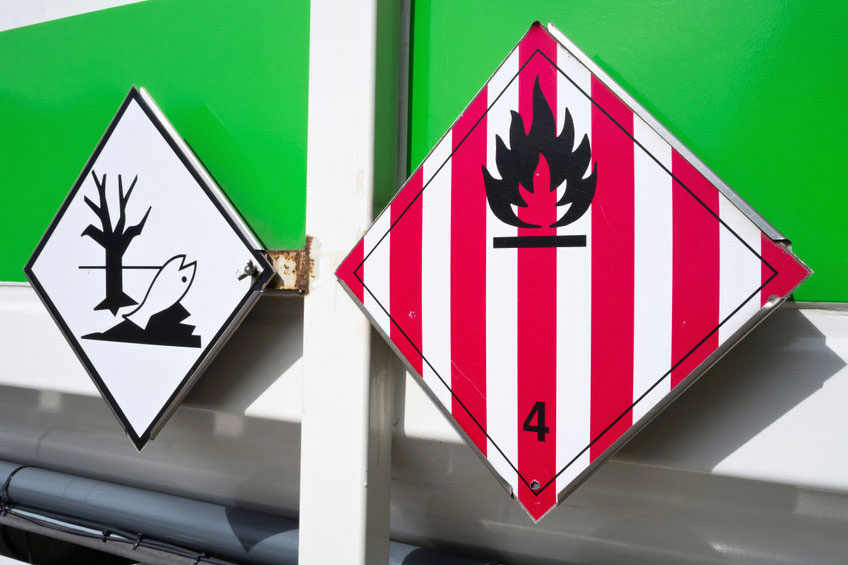
The DOT Hazmat: Function Specific – Hazard Classes and Divisions course is designed for employees responsible for handling, shipping, or transporting hazardous materials. This training focuses on understanding DOT hazard classes and divisions, enabling workers to correctly identify, classify, and manage hazardous substances in accordance with regulatory standards. Participants will learn how different hazard types are categorized and how proper classification supports safe handling, packaging, labeling, and transportation.
This DOT hazmat function-specific training is ideal for warehouse personnel, logistics staff, drivers, and safety professionals who must apply hazard classification knowledge in their daily roles. The course simplifies complex hazard class divisions into practical, easy-to-understand concepts to improve requirements and reduce risk.
Upon completion, learners receive CEUs, a Certificate of Completion, and a PVC wallet ID, verifying their training and readiness to safely manage hazardous materials.
 Self-Paced Training
Completion Certificate
No Hidden Fees
Job Aid
Self-Paced Training
Completion Certificate
No Hidden Fees
Job Aid
Why Workers Choose Us
| features |  |
other providers |
|---|---|---|
| Instant Downloadable Certificate |  |
|
Free Study Guide

|
|
|
| Discounts For Businesses
|
|
 |
| No Hidden Cost | |
|
| Mobile Compatibility
|
|
|
| Flexible Learning
|
|
|
Satisfied Customers
Learning Objectives
- Understand the purpose and importance of classifying hazardous materials for safe transportation.
- Identify different types of hazardous materials and their associated risks.
- Apply knowledge of hazard identification to support compliance with transportation regulations.
- Distinguish between various classes and subdivisions of hazardous materials in real-world scenarios.
Course Outline
-
1. Course Overview
-
2. Explosives
-
3. Compressed Gases
-
4. Flammable and Combustible Liquids
-
5. Flammable Solids
-
6. Oxidizers and Organic Peroxides
-
7. Toxic Materials
-
8. Radioactive Materials
-
9. Corrosive Materials
-
10. Miscellaneous Hazardous Materials
-
11. Final Exam
Training Process
A complete DOT hazardous materials training program includes general awareness (basic or advanced), function-specific and modal-specific training, security awareness training, and, when applicable, in-depth security or driver training. Safety awareness training may also be required as part of the full curriculum. Employers must train, test, and certify all hazmat employees within 90 days of employment or when they take on new hazardous materials responsibilities. Until training is completed, employees may only perform related tasks under direct supervision. Recurrent training is required at least once every three years under DOT regulations. For air carrier employees, the FAA requires retraining every two years. Employers are responsible for maintaining accurate training records for requirements. These requirements were previously associated with older regulations such as HM-181, HM-126, and HM-126F. Additional Training Depending on job duties, employees may also need OSHA, EPA, or other hazard response training. Employers must provide site-specific instruction covering workplace procedures, equipment, and emergency protocols, and this training should be properly documented.
VIDEO TESTIMONIAL
FAQ
Why is understanding hazard classes important in hazmat work?
What are hazard classes and divisions in simple terms?
How does this course help with real job tasks?
Who should take this function-specific hazmat course?
Will this course help me avoid compliance issues?
Do I need prior hazmat training before taking this course?
Join our mailing list
Get announcements, industry updates and promotional offers.
17350 TX-249 Ste 220 19204, Houston, TX 77064, United States
