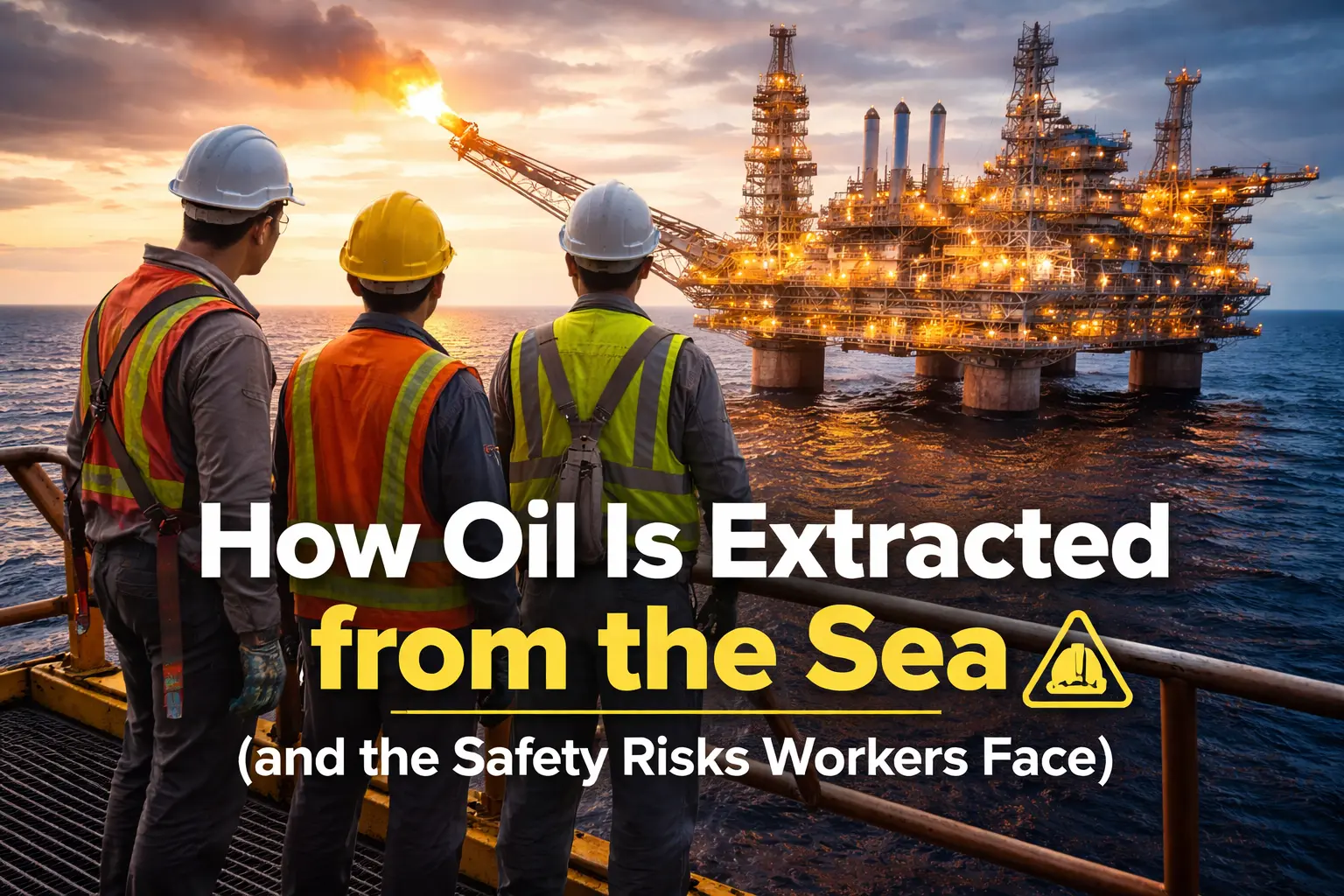
Extracting oil from deep beneath the ocean is one of the most dangerous jobs in the world. Imagine standing on a steel platform hundreds of miles from shore, with waves crashing below and a drill plunging through thousands of feet of water and rock. One wrong move, one overlooked warning sign, and things can go catastrophically wrong - as they did on April 20, 2010, when the Deepwater Horizon rig exploded in the Gulf of Mexico, killing 11 workers and triggering the largest marine oil spill in history.1013
For the men and women who work these rigs, the rewards can be high, but the risks are constant. Offshore oil extraction demands precision engineering, round-the-clock operations, and ironclad safety protocols. That’s why understanding both the process and the very real hazards is essential, not just for the industry, but for anyone responsible for keeping these workers safe
The Offshore Oil Extraction Process: From Search to Flow
The journey from seabed to surface isn’t a simple “drill and pump” operation. It’s a carefully staged process that can take years and cost hundreds of millions of dollars.
Exploration begins with seismic surveys:Ships tow arrays of sensors that send sound waves into the seafloor. The returning echoes help geologists map potential oil and gas reservoirs hidden under layers of rock. Once a promising site is identified, exploration wells are drilled using mobile offshore drilling units.
Drilling is where the real intensity kicks in: A massive drill bit on the end of a long string of pipe bores through the ocean floor. As the well deepens, a steel casing is inserted and cemented to stabilize the hole and prevent leaks. Crews constantly monitor pressure, mud weight, and gas levels to keep the well under control.
Extraction (Production) starts once the well reaches the reservoir: Oil and gas flow up through the production tubing, often under natural pressure at first. As pressure drops over time, pumps or injection methods (like water or gas reinjection) help bring the hydrocarbons to the surface. On the platform, the mixture is separated into oil, gas, water, and impurities.
Transportation follows: Oil moves via pipelines to shore or is stored on floating production storage and offloading (FPSO) vessels before being loaded onto tankers. Natural gas might be piped ashore, reinjected, or converted into LNG.
This entire chain happens in one of the harshest environments on Earth - extreme depths, high pressures, corrosive saltwater, and unpredictable weather. No wonder safety can never take a backseat.
Major Hazards on Offshore Oil Rigs
The statistics tell a sobering story. Offshore workers face elevated risks of fatal injuries compared to many other industries. Here are the biggest threats they confront daily:
Fire and Explosions
Hydrocarbons under pressure are highly flammable. A single spark near a gas leak can be devastating. The Deepwater Horizon disaster started with a methane gas surge that overwhelmed the rig’s safety systems, leading to explosions and a raging fire. Investigations revealed multiple failures, including a disabled alarm and misinterpreted pressure tests.
Equipment Failure and Blowouts
Worn-out blowout preventers, corroded pipes, or failing valves can turn a controlled well into a gusher. These mechanical breakdowns often lead to uncontrolled releases, fires, or toxic exposures.
Falls from Height
Rigs are full of elevated walkways, derricks, and platforms. Slippery surfaces from rain, oil, or sea spray make every step treacherous. OSHA data consistently shows falls as a leading cause of serious injuries in oil and gas operations.
Toxic Gas Exposure
Hydrogen sulfide (H₂S), methane, and volatile organic compounds can displace oxygen or poison workers in confined spaces. Even brief exposure can cause unconsciousness or long-term health damage.
Harsh Weather and Structural Risks
Hurricanes, rogue waves, and high winds can batter rigs. In colder regions, ice buildup adds another layer of danger. Fatigue from 12- or 24-hour shifts in these conditions compounds every other risk.
These aren’t hypothetical scenarios. Real incidents continue to remind the industry that complacency costs lives.
OSHA Safety Standards for Offshore Workers
While primary oversight for drilling operations on the Outer Continental Shelf falls under agencies like BSEE (Bureau of Safety and Environmental Enforcement), OSHA plays a critical role in protecting workers - especially during construction, maintenance, and spill response activities. Key OSHA requirements include:
- Personal Protective Equipment (PPE) : Hard hats, steel-toe boots, flame-resistant clothing, eye protection, hearing protection, and respiratory gear when needed. Employers must assess hazards and provide appropriate equipment at no cost to workers.
- Hazard Communication : Workers have the right to know about the chemicals and substances they’re exposed to. This includes proper labeling, Safety Data Sheets (SDS), and training on handling procedures.
- Fall Protection : Guardrails, safety nets, or personal fall arrest systems are required when working at heights. On rigs, this often means full-body harnesses properly anchored and inspected.
- Emergency Response and Training : Plans must cover evacuations, fire suppression, medical response, and spill containment. Regular drills save lives when seconds count.
OSHA’s General Duty Clause also requires employers to maintain a workplace free from recognized hazards likely to cause death or serious harm - even when specific standards don’t cover every scenario.
Required Safety Training for Oil Rig Workers
This is where knowledge truly becomes protection. Comprehensive training isn’t optional - it’s what separates a safe career from a tragic headline.
OSHA 10-Hour and 30-Hour Outreach Training (General Industry or Maritime)
These courses cover hazard recognition, fall protection, electrical safety, PPE, and emergency procedures. The 30-hour version is often recommended for supervisors and provides deeper insight into creating safer work environments.
HAZWOPER (Hazardous Waste Operations and Emergency Response)
Essential for workers who may deal with oil spills or hazardous substances. Levels range from 8-hour refresher courses to 40-hour initial training, covering decontamination, PPE for hazmat situations, and spill response.
Additional Critical Training
Here are some additional critical trainings involved:
- Firefighting and fire prevention
- Hydrogen sulfide (H₂S) awareness and rescue
- Confined space entry
- Rig-specific safety orientations
- Helicopter underwater escape training (HUET) for offshore transport
- First aid, CPR, and survival at sea
Top-tier operators go beyond minimum requirements with simulator training, behavioral safety programs, and regular competency assessments. The best companies foster a culture where stopping work for safety concerns is not just allowed - it’s expected.
Conclusion: Safety Must Come First
Offshore oil extraction powers much of our modern world, but it demands respect for the ocean’s power and the human lives on those platforms. From the first seismic survey to the final barrel loaded onto a tanker, every stage carries risks that proper procedures, equipment, and training can dramatically reduce.
If you or your team works in offshore operations, don’t wait for an incident to highlight gaps in safety knowledge. Investing in quality OSHA-safe training today protects lives, prevents costly downtime, and keeps operations running smoothly for years to come.
Ready to strengthen your team’s safety culture? Explore our specialized offshore and oil rig safety courses designed specifically for the unique challenges of this high-risk industry.