Short answer
In 2024, 5,070 US workers died from work injuries, one every 104 minutes, a rate of 3.3 per 100,000 full-time workers (BLS, released February 19, 2026). Construction had the most deaths (1,034), and falls, slips and trips were the leading event across all industries (844). OSHA's most-cited standard for fiscal 2025 was fall protection (29 CFR 1926.501, 6,992 violations), and the 2026 maximum penalty is $16,550 per serious violation and $165,514 per willful or repeat violation. Work injuries cost the US an estimated $176.5 billion in 2023 (National Safety Council).
While workplace safety has improved through years, there are still many businesses that don’t take enough precautions to prevent occupational accidents. It is no secret that proactive site safety practices and appropriate work safety awareness lead to fewer accidents, OSHA violations and injuries in the workplace. This article will lay out the most important workplace safety statistics that you must know in 2026.
What Are the Most Frequently Cited OSHA Standards?
One way to determine the state of workplace safety is by examining violation trends. Below are the top 10 most cited OSHA standards from Fiscal Year 2025 (final data), which offer deep insights into where safety lapses most often occur:
Fall Protection: General Requirements
6,992
Hazard Communication
3,010
Ladders
2,842
Control of Hazardous Energy (Lockout/Tagout)
2,562
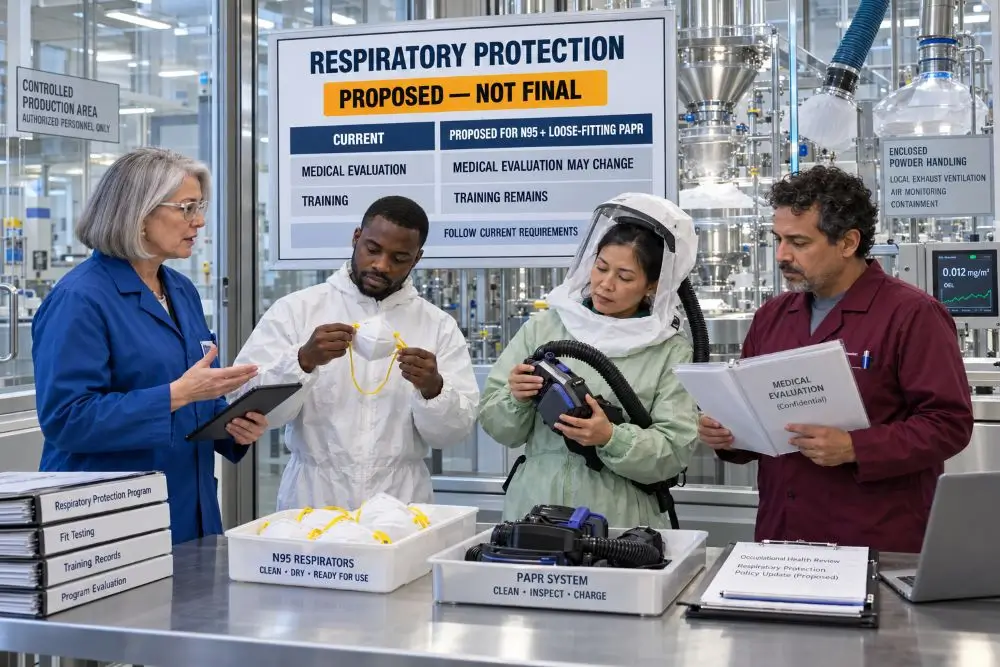
Respiratory Protection
2,294
Scaffolding
2,286
Fall Protection: Training Requirements
2,216
Powered Industrial Trucks
2,150
Personal Protective and Lifesaving Equipment: Eye and Face Protection
1,965
Machine Guarding
1,498
How Safe Do Workers Feel at Work? (OSHA Outreach Courses Survey)
OSHA Outreach Courses surveyed more than 500 workers from different industries to get their perspective on how safe they feel at work. Here are the results:
🛡️ Workplace Safety Insights
😟 1 in 10 Workers Feel Unsafe
Only 1 in 10 workers report feeling unsafe at their workplace—an important indicator of safety culture gaps.
✅ Just 22% Feel “Very Safe”
Only 22% of employees said they feel “very safe” on work sites, indicating room for stronger safety measures and communication.
🚨 18% Never Had a Safety Drill
18% of workers say their employers have never conducted a workplace safety drill.
🧯 60% Ready for Emergencies
Despite gaps, 60% of employees feel confident managing workplace emergency situations.
📢 Only 26% Say Concerns Are Always Heard
Just 26% of workers say their safety concerns are “always” taken seriously by management.
🚫 9% Say Supervisors Ignore Them
9% of workers feel their safety concerns are completely ignored by their supervisors.
🖥️ 33% Lack Online Safety Training
33% of employees said their employers never provide online safety training programs.
🦺 88% Have Access to PPE
Encouragingly, 88% of workers said personal protective equipment and safety tools are always accessible when needed.
How Does OSHA Categorize Injuries and Illnesses?
When it comes to discussing workplace safety statistics, it is first important to get familiar with the terminologies. OSHA recognizes two categories of incidents: injuries and illnesses. These categories distinguish between incidents that harm employees and those that result in long-term or chronic health effects.
Injuries
Stated below are the conditions considered as injuries by OSHA.
Illness
Listed down are health issues that OSHA categorizes as illnesses.


Workplace injuries are still unfortunately prevalent in the year 2026. For this reason, OSHA imposes heavy fines on violations of its safety standards.
Listed below are the 2026 maximum penalties for federal OSHA violations (state-plan states may differ).
How Much Are OSHA Fines in 2026?
General Violations
Serious Violations
Willful or Repeat Violations
Failure to Abate Up to
How Big Is OSHA? Inspectors, Workplaces and Inspections

million was OSHA’s budget appropriation in fiscal year 2023 (OSHA).

is the approximate number of inspectors employed by federal OSHA and its state-plan partners (OSHA).

is the approximate number of worksites that OSHA and its state partners cover (more than 8 million, per OSHA).

federal OSHA inspections were conducted in fiscal year 2024 (OSHA).

of all U.S. work-related deaths in 2024 (1,034 of 5,070, BLS) occurred in the construction industry.
How to Prevent Workplace Accidents and OSHA Violations
OSHA violations and workplace accidents can result in severe consequences ranging from fines, loss of productivity and legal complexities to serious injuries and worker fatalities. However, employers and employees can opt for a valuable solution to prevent such violations: OSHA Outreach Courses.
These courses, known as 10 hour construction program and 30 hours training courses for construction safety, and General Industries can help individuals avoid potential OSHA violations through maintaining workplace safety by preventing workplace injuries.
These courses are meant to target different degrees of employees, such as ten hour courses are for candidates who are new or starting their career in the construction or general industries. In contrast, thirty hour courses are for candidates at a supervisory or managerial level of employment.
Adequate training helps workers recognize and control hazards.
How Much Do Workplace Injuries Cost the US?
5 MYTHS About Workplace Injuries and OSHA
If you’ve done the job for years, you don’t need all the safety steps
Overconfidence and complacency can be disastrous at a workplace. Experience is not a substitute for precaution.
OSHA Prioritizes Large Companies
OSHA performs suprise inspections on large and small business alike. No company is too small to be held accountable for safety violations.
If OSHA Comes to Inspect You, Employees Should Stop Working
Employees should never stop working or do anything to give a false impressions to the inspector.
Safety is the supervisor’s job
In reality, safety is everyone’s responsibility. A single careless act can put the entire team at risk
safety practices are just guidelines
They are enforceable laws, and failure to adhere can lead to fines or shutdowns.
9 Important Workplace Injury Facts
- The OSHA 300 Log requires employers to check one of 6 boxes to categorize the injury/illness: (1) injury (2) skin disorder (3) respiratory condition (4) poisoning (5) hearing loss (6) all other illnesses.
- BLS recorded 5,070 fatal work injuries in the US in 2024, a rate of 3.3 per 100,000 full-time equivalent workers.
- Transportation incidents were the leading cause of fatal work injuries in 2024: 1,937 deaths, 38.2% of the total (BLS).
- Falls, slips and trips caused 844 work deaths across all industries in 2024 (BLS).
- Construction had the most deaths in 2024 (1,034), while agriculture had the highest rate among major industries (20.9 per 100,000) (BLS).
- Manufacturing’s 2024 fatality rate was 2.4 per 100,000, below the all-industry rate of 3.3 (BLS).
- In the UK, an estimated 1.9 million workers suffered from work-related ill health during 2024/25, according to HSE.
- Work-related illness and injuries in the UK resulted in 40.1 million working days lost in 2024/25 (HSE).
- About 964,000 of those workers (around 51%) had work-related stress, depression or anxiety (HSE, 2024/25).
Which Industries Have the Most Workplace Deaths?
The number of workplace fatalities in the United States varies significantly by industry. The table below shows 2024 fatal occupational injuries and rates for selected industries (BLS).
| Industry (2024) | Fatal injuries | Rate per 100,000 full-time workers |
|---|---|---|
| Construction | 1,034 | 9.2 |
| Transportation and warehousing | 865 | 12.2 |
| Agriculture, forestry, fishing and hunting | 475 | 20.9 |
| Manufacturing | 353 | 2.4 |
Source: BLS Census of Fatal Occupational Injuries, 2024. All industries: 5,070 deaths, 3.3 per 100,000.
How Do Workplace Injuries Affect a Business?
Accidents or incidents at a workplace lead to some significant impacts that can clash with the business operations and sometimes even with the ultimate vision of a business. Shown below are some primary impacts of accidents and incidents on a company:
Loss of productivity
Reduction of sales
Low staff morale
Loss of reputation
Conclusion
The mentioned construction site injury statistics and workplace injuries figures demonstrate the needs for stakeholders to invest heavily into creating safe work environments. Preventing injuries requires a proactive approach that involves everyone in the organization from top to bottom. However, the onus is on the employers to prioritize safety, empower employees, and foster a culture of safety and compliance.
Frequently Asked Questions
How many workers die on the job in the US each year?
BLS recorded 5,070 fatal work injuries in 2024 (3.3 per 100,000 full-time equivalent workers), down 4.0% from 5,283 in 2023.
What is the leading cause of workplace death?
Transportation incidents were 38.2% of 2024 fatalities (1,937). Falls, slips and trips were next at 844.
Which industry has the most workplace deaths?
Construction had the most (1,034 in 2024, a rate of 9.2 per 100,000). Agriculture had the highest rate among major industries at 20.9, and mining 13.8.
What are the most cited OSHA standards?
For fiscal 2025: fall protection general requirements (1926.501), Hazard Communication (1910.1200), ladders (1926.1053), lockout/tagout (1910.147) and respiratory protection (1910.134) led the list.
How much are OSHA fines in 2026?
Up to $16,550 per serious, other-than-serious or posting violation, up to $16,550 per day for failure to abate, and up to $165,514 per willful or repeat violation. OSHA made no inflation increase for 2026.
How much do work injuries cost?
The National Safety Council estimated $176.5 billion in 2023: $53.1 billion in wage and productivity losses, $36.8 billion in medical costs and $59.5 billion in administrative costs.
Sources and Further Reading
- National Census of Fatal Occupational Injuries in 2024 (bls.gov)
- Fatal work injuries by selected private industries, 2024 (bls.gov)
- OSHA Penalties (osha.gov)
- 2026 Annual Adjustments to OSHA Civil Penalties (May 21, 2026 memo) (osha.gov)
- OSHA reveals final Top 10 data for FY 2025 (Safety+Health Magazine)
- Commonly Used Statistics (osha.gov)
- Work Injury Costs (National Safety Council Injury Facts)
- HSE annual workplace health and safety statistics (GB, 2024/25) (hse.gov.uk)