Electrical safety is a critical concern in every workplace, as exposure to energized equipment or faulty wiring can lead to serious injuries or fatalities.
OSHA, the Occupational Safety and Health Administration, sets the legal standards to protect employees from recognized workplace hazards, including electrical risks.
NFPA 70E, the Standard for Electrical Safety in the Workplace, provides practical guidance on how to manage and reduce these hazards.
Understanding how OSHA regulations and NFPA 70E work together helps employers create a safer work environment, stay compliant with the law, and protect their employees from preventable accidents.
By following these standards, organizations can reduce risks while promoting a culture of safety.
What is OSHA and Its Role in Electrical Safety
The Occupational Safety and Health Administration (OSHA) was established under the Occupational Safety and Health Act of 1970 to ensure safe and healthful working conditions for employees across the United States.
Its primary mandate is to require employers to provide a workplace free from recognized hazards, including electrical risks such as shock, arc flash, and electrocution.
OSHA regulations apply to nearly all industries and company sizes, from small businesses to large corporations, ensuring that every employee has the right to a safe environment.
By enforcing safety standards and conducting inspections, OSHA helps employers identify and mitigate electrical hazards before accidents occur, making compliance essential for both worker safety and legal protection.
Understanding NFPA 70E
NFPA 70E, the Standard for Electrical Safety in the Workplace®, is designed to help employers and employees manage and mitigate electrical hazards on the job.
It provides guidance on safe work practices, proper use of personal protective equipment (PPE), and risk assessment procedures.
While OSHA sets general workplace safety requirements, NFPA 70E offers specific, detailed measures for electrical safety, making it a practical tool to complement OSHA regulations.
Key Electrical Hazards Addressed by NFPA 70E:
Here are some key hazards addressed by NFPA 70E:
Electrical Shock
Occurs when a person comes into contact with a live electrical conductor, potentially causing burns, nerve damage, or cardiac arrest.
NFPA 70E outlines safe work practices to prevent shock incidents.
Arc Flash
A sudden release of energy caused by an electrical arc, resulting in intense heat, light, and pressure.
Arc flashes can cause severe burns, blindness, or even fatal injuries. NFPA 70E provides methods for calculating risk and selecting appropriate protective gear.
Electrical Hazards and Employee Protection
Workplace electrical hazards are any conditions or situations that could expose employees to harm from electricity.
Common hazards include electrical shock, which can occur when workers contact live circuits; arc flash, a sudden energy release that can cause severe burns or injuries; exposed wiring, which increases the risk of accidental contact; and energized equipment, which poses dangers if not properly managed.
Both OSHA and NFPA 70E emphasize the critical importance of verifying that equipment is de-energized before any work begins.
Employees must follow strict lockout/tagout procedures, test for the absence of voltage, and only proceed with work when it is safe to do so.
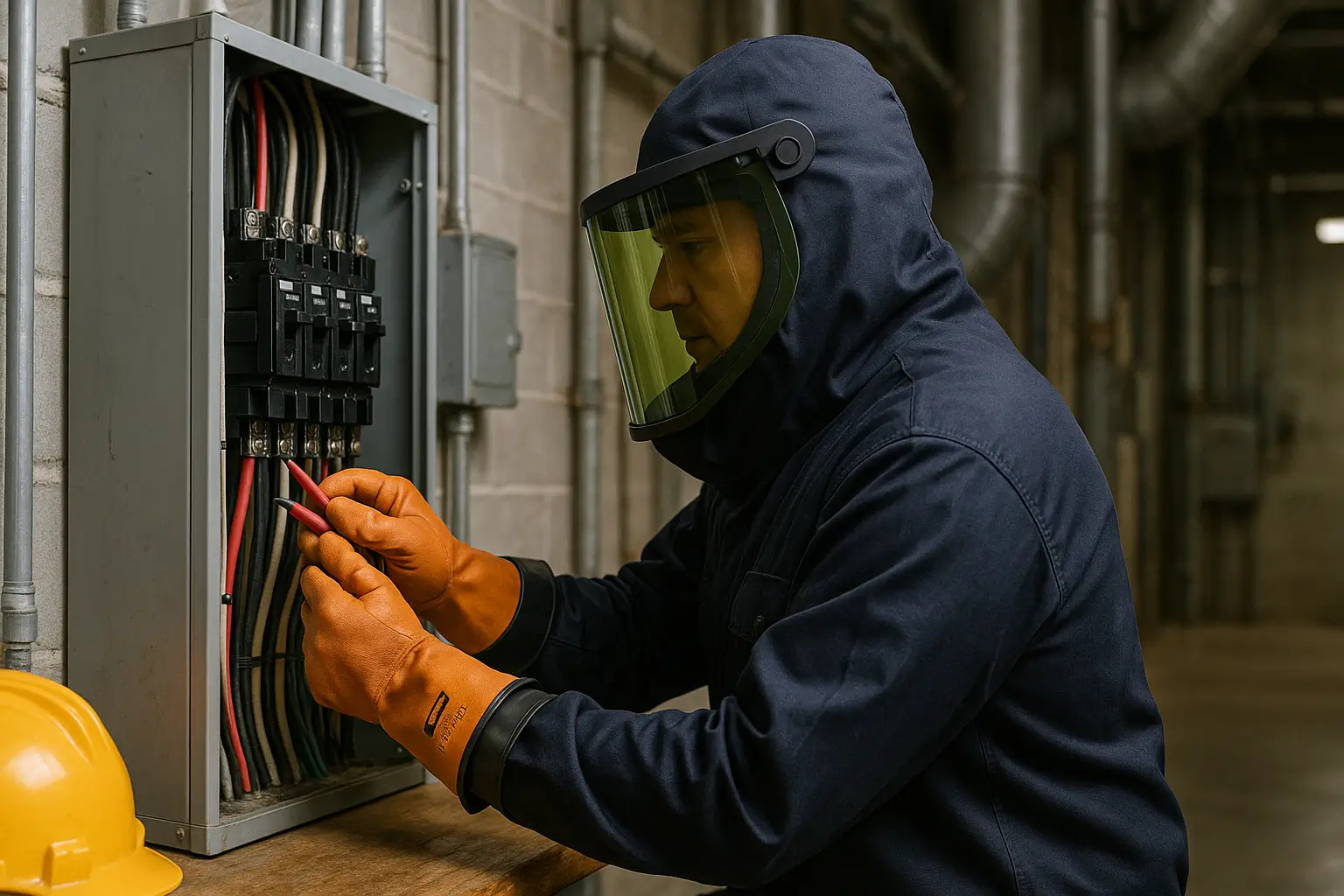
Equally important is the use of personal protective equipment (PPE) such as insulated gloves, arc-rated clothing, face shields, and safety footwear.
Adhering to workplace protocols and PPE guidelines ensures that employees are protected from the serious risks associated with electrical work, helping reduce accidents, injuries, and potential fatalities.
Arc Flash and PPE Requirements
An arc flash is a sudden release of electrical energy through the air when a high-voltage gap exists, producing intense heat, light, and pressure waves.
It can cause severe burns, blindness, hearing loss, or even fatalities if proper precautions are not taken.
Arc flash incidents are one of the most serious hazards in electrical work and must be addressed proactively.
To protect employees, it’s crucial to determine the correct personal protective equipment (PPE).
This can be done through incident energy analysis, which calculates the energy a worker might be exposed to in a potential arc flash, or by following the NFPA 70E arc flash PPE categories, which provide standardized protection levels for common electrical tasks.
NFPA 70E offers a practical and widely recognized framework for compliance, guiding employers and employees on the selection of arc-rated clothing, insulated gloves, face shields, and other protective gear.
Using these standards ensures that workers remain safe while performing electrical tasks, reduces the likelihood of injury, and helps employers meet OSHA requirements for electrical hazard protection.
Compliance and Legal Implications
Federal law requires employers to protect workers from all recognized electrical hazards, including electric shock and arc flash.
Under the Occupational Safety and Health Act, OSHA can enforce these requirements across all industries, meaning no employer, large or small, is exempt from maintaining a safe electrical work environment.
Failure to comply can result in costly OSHA citations, legal liability, increased insurance claims, and preventable workplace accidents.
Willful violations, in particular, carry the highest penalties and can significantly harm a company’s reputation and operations.
Because OSHA does not prescribe exact electrical safety procedures, employers often rely on NFPA 70E, which is widely accepted as a practical and effective way to meet OSHA’s expectations.
Following NFPA 70E helps organizations demonstrate due diligence, reduce risk, and protect their workforce from serious electrical injuries.
Conclusion
Understanding how OSHA regulations and NFPA 70E work together is essential for maintaining a safe and compliant workplace.
While OSHA sets the legal requirements for protecting employees from electrical hazards, NFPA 70E provides the practical steps and best practices to meet those expectations.
By following these guidelines, employers can reduce risks, prevent serious electrical incidents, and create a safer environment for every worker.
Prioritizing electrical safety isn’t just about compliance; it’s about protecting lives.